Categories
Uncategorized

A NEW DAWN FOR PUBLIC BENEFIT ORGANIZATIONS (PBOs) IN KENYA

A New Dawn for Public Benefit Organizations (PBOs) in Kenya

The Public Benefit Organizations Act, 2013 (PBO Act) has officially replaced the Non-Governmental Organizations Coordination Act, CAP 134 (NGO Act). This change, as outlined in the Kenya Gazette Supplement No. 100, under Legal Notice No. 78, was enacted by the Cabinet Secretary for Interior and National Administration, Hon. Kithure Kindiki. The PBO Act comes into effect today, May 14, 2024.

Public Benefit Organizations Act, 2013: From Inception to Implementation in 2024

The Public Benefit Organizations Act, 2013 was passed by Parliament in December 2012 and received approval from former President Mwai Kibaki in January 2013. Despite its passage, the Act remained inactive until May 9, 2024. On this date, the Cabinet Secretary for Interior and National Administration exercised the powers granted by Section 1 of the PBO Act, designating May 14, 2024, as the date for its implementation.


Public Benefit Organizations Act, 2013: A Detailed Overview and Analysis

The Public Benefit Organizations Act, 2013 (PBO Act) defines a “public benefit organization” (PBO) as a voluntary grouping of individuals or organizations, which can be membership-based or non-membership-based, and is characterized by being autonomous, non-partisan, and non-profit. According to the PBO Act, a PBO must:

  1. Be organized and operate locally, nationally, or internationally.
  2. Engage in public benefit activities in any of the areas outlined in the Sixth Schedule.
  3. Be registered as such by the Authority.

Key Enhancements Under the PBO Act:

  1. Introduction of the Public Benefit Organizations Regulatory Authority:
    • The Authority, under Section 34, is responsible for registering and de-registering PBOs, advising the government on their activities, maintaining the register, reviewing annual reports, ensuring compliance, and providing advice and training.
  2. Clear Guidelines for Registration:
    • Section 8 specifies requirements for registration, including necessary documentation for applications, registration criteria for international NGOs as PBOs, and constitutional information for PBOs.
  3. Defined Timelines for Registration Processing:
    • Section 9 mandates the issuance of certificates within 60 days of application receipt, providing more clarity than the NGO Act.
  4. Reduced Administrative Discretion in Registration:
    • The Act requires the Authority to notify applicants in writing if their application is unsatisfactory, detailing reasons and providing up to 30 days to comply, promoting transparency compared to the NGO Act.
  5. Establishment of the Public Benefit Organization Disputes Tribunal:
    • Section 50 creates the Tribunal to handle complaints and appeals related to the Act, offering a non-judicial resolution mechanism.
  6. Formation of Self-Regulation Forums:
    • Section 20 allows organizations to form forums for self-regulation, tasked with developing and enforcing conduct standards.
  7. Creation of the National Federation of Public Benefit Organizations:
    • This Federation serves as an umbrella entity for registered PBOs and self-regulation forums, monitoring performance and advising the Authority.
  8. Provision of Government Support:
    • The Second Schedule outlines government support including tax exemptions, incentives for donations, direct financing, preferential public procurement treatment, and access to training.

Potential Challenges Under the PBO Act:

  1. Complex Registration Process:
    • The detailed requirements in Section 8 may result in a lengthy and complex registration process.
  2. Uncertain Registration Costs:
    • The registration fee is yet to be prescribed, adding uncertainty to the registration costs.
  3. Tedious Financial Reporting Requirements:
    • Section 30’s requirement for maintaining proper books and preparing annual statements with independent auditor opinions could be burdensome.
  4. Notification of Organizational Changes:
    • Section 8(8) requires notification to the Authority within 60 days of changes in membership, governing body, or constitution, which may be tedious for organizations.

We hope this overview clarifies the implications of the Public Benefit Organizations Act, 2013. For specific legal advice or further information on compliance, please contact us at info@wka.co.ke or visit our website wakilihub.co.ke/. You can also reach us at +254 798 03 580 or visit our Nairobi Hub at Parklands, Valley View Business Park, 6th Floor, City Park Drive, Off Limuru Road.
Categories
Uncategorized

Find a Professional Overseas Lawyer in the UK

Find a Professional Overseas Lawyer in the UK: WKA Advocates, Nairobi, Kenya

At WKA Advocates, based in Nairobi, Kenya, we provide top-tier legal services to clients who need professional assistance with legal matters in the UK. If you’re looking for help with employment law, property purchases, UK immigration, or company registration in London, we are here to make the process smooth and stress-free. With our global network, we connect Kenyan clients with trusted solicitors in the UK, ensuring efficient and cost-effective solutions.

Overseas Solicitors in London for Kenyan Clients

Navigating UK legal matters from Kenya can be challenging, but with WKA Advocates, you can rest assured that you are in good hands. We partner with experienced UK solicitors to offer a wide range of services to our Kenyan clients. Here’s how we can assist you:

1. Employment Law in the UK

  • Our team provides expert legal advice for Kenyans seeking employment opportunities in the UK. We collaborate with top employment solicitors in London to handle employment contracts, workplace disputes, and UK employment law compliance. If you’re planning to work in the UK or need legal assistance with job-related issues, we have the expertise to guide you.

2. Buying Property in the UK from Kenya

  • If you’re a Kenyan investor or buyer interested in purchasing property in the UK, our overseas property solicitors are ready to assist. From residential properties to commercial investments, we help you navigate the process smoothly, ensuring compliance with UK property laws. We also assist with tenancy agreements and ongoing property management.

3. UK Immigration Legal Assistance

  • Immigration processes can be complicated, especially when moving from Kenya to the UK. Whether you’re applying for a UK visa, indefinite leave to remain, or need assistance with family visas, our team works closely with London-based immigration lawyers to handle your case. We guide you through each step to ensure a successful outcome.

4. Company Registration in the UK for Kenyan Entrepreneurs

  • Starting a business in the UK from Kenya requires expert legal guidance. WKA Advocates helps Kenyan entrepreneurs navigate the complex process of company registration, business immigration, and compliance with UK corporate regulations. Our team ensures that your business is set up for success in the UK market.

Why Choose WKA Advocates?

  1. Professional Expertise: With a combination of local knowledge and international legal expertise, we offer the best legal support for Kenyan clients dealing with legal matters in the UK.
  2. Tailored Legal Solutions: We take a personalized approach to each case, providing customized solutions that address the specific needs of our clients. Whether it’s immigration, employment, or property issues, we have you covered.
  3. Cost-Effective and Efficient: We provide legal services that are both affordable and efficient, helping you manage your UK legal needs without unnecessary costs. By leveraging technology and strong partnerships in London, we ensure a smooth process for all our clients.
  4. In-Person and Remote Services: Most of our services can be handled remotely, but if necessary, we can arrange face-to-face meetings in Nairobi or London to discuss your legal matters in detail.

Contact WKA Advocates Today

Looking for professional legal help in the UK while based in Kenya? WKA Advocates is your trusted partner for navigating UK legal systems. Whether you’re buying property, setting up a business, or dealing with immigration matters, we make the process easy and hassle-free.

Contact WKA Advocates today for expert advice on UK legal matters. We’re committed to providing the best overseas legal support for our clients in Nairobi and across Kenya.

Categories
Uncategorized

Cost of Trademark Registration in Kenya

Cost of Trademark Registration in Kenya

A Detailed Breakdown

Trademark registration involves various costs depending on the specifics of your application. Understanding these expenses can help you budget effectively and avoid surprises. This article provides a detailed breakdown of the costs of registering and renewing a trademark in Kenya.

Understanding Trademark Costs
The cost of trademark registration depends on the number of classes of goods or services and the complexity of your application. Key costs include:

  • Application Fees: USD 200 for the first class and USD 150 for each additional class.
  • Search Fees: USD 20 for a preliminary trademark search.
  • Renewal Fees: USD 200 for the first class every 10 years.

Detailed Cost Table

Description Fee (USD) Form
Application fee for the first class 200 TM2
Application fee for each subsequent class 150 TM2
Registration fee for the first class 150
Renewal fee for the first class (every 10 years) 200 TM10
Opposition filing fee for the first class 250 TM6

For comprehensive cost guidance, consult WKA Advocates today.

Categories
Uncategorized

Property Fiasco of 100 Investors Losing Their Investments in Greatwall Apartments, Athi River, Kenya

Behind the Headlines: The Encumbered Property Fiasco at Greatwall Apartments, Athi River, Kenya

Purchasers of 100 units at Greatwall Apartments in Athi River, Kenya, have lost their investments due to buying encumbered units. Erdemann Properties Limited sought a temporary injunction in the High Court and the Court of Appeal to prevent KCB Bank from selling the charged apartments at a public auction to recover the debt owed to it. However, both courts denied the request and refused to classify the third-party buyers as “innocent purchasers for value.” Consequently, KCB is authorized to exercise its statutory power of sale.

The Erdemann case parallels the landmark cases of Torino Enterprises Ltd vs. Attorney General (SC Petition No.5 (E0060) of 2022) and Dina Management Limited vs. The County Government of Mombasa & 5 Others (Petition 8 (E010) of 2021). These cases established that purchasers must conduct thorough due diligence (#BuyerBeAware) to identify all encumbrances on the title and ensure they obtain a valid property title. With many Kenyans viewing engaging qualified advocates as an unnecessary expense, such unfortunate situations are likely to increase.

Trial Court: In Brief

Application for a Temporary Injunction in Civil Suit E209 of 2022 Between Erdemann Properties Limited v. KCB Bank Limited

On June 6, 2022, Erdemann Properties Limited filed a Notice of Motion in the High Court of Kenya seeking a temporary injunction to prevent KCB Bank Limited from selling 100 apartment units at a public auction pending the hearing and determination of the suit.

Erdemann, a real estate developer, had obtained loans totaling Kshs. 1.84 billion from KCB to finance the construction of 2,190 apartment units on land registered as LR No 27317/2. The security for these loans included a legal charge over properties Title No. IR 202852 LR 209/22016 and a deed of assignment of project receivables.

Erdemann met its loan repayment obligations until March 12, 2020, when its operations were affected by the COVID-19 pandemic. The loans were restructured, with further securities including a legal charge of Ksh. 425,750,000 on 100 unsold units on LR No 27317/2. Despite this, Erdemann sold the charged units to unsuspecting purchasers, contrary to the terms of the charge, which required all proceeds from sales to be deposited into a designated escrow account.

In its Notice of Motion, Erdemann argued that KCB’s statutory notices to sell the 100 units, despite their sale to innocent purchasers, would defeat the purchasers’ rights. Erdemann offered alternative security to KCB, asserting it was fair to nullify the charge on the 100 units for the benefit of the innocent purchasers.

KCB contended that Erdemann breached the charge terms by selling the 100 units without consent and failing to deposit proceeds into the escrow account. Thus, the sale was unlawful, and the purchasers did not qualify as innocent purchasers for value. KCB argued it had the right to exercise the power of sale due to Erdemann’s loan default, amounting to Kshs. 2 billion.

The Court’s Determination

The Court’s primary consideration was whether Erdemann had established a case for a temporary injunction, guided by the principles in Giella v. Cassman Brown & Co Ltd [1973] EA 358:

  1. The applicant must show a prima facie case with a probability of success.
  2. An interlocutory injunction will not normally be granted unless the applicant might otherwise suffer irreparable harm not adequately compensated by damages.
  3. If in doubt, the court will decide on the balance of convenience.

The Court found Erdemann failed to remit sales proceeds to KCB or the escrow account. It ruled Erdemann had not shown a prima facie case with a probability of success and that any harm could be compensated by damages. The application for a temporary injunction was dismissed with costs to KCB. Erdemann appealed the decision.

Civil Application No. E042 of 2024 Between Erdemann Properties Limited v. KCB Bank Limited at the Court of Appeal

Erdemann’s appeal centered on the argument that purchasers of the 100 units and 281 off-plan units were innocent purchasers for value, and KCB’s intended sale was illegal. The Court of Appeal determined whether a temporary injunction should be issued pending the appeal.

The Court stated that for a temporary injunction to succeed, the appeal must be arguable and not frivolous, and the injunction must prevent the appeal from being rendered nugatory. The Court found the appeal arguable but not likely to be rendered nugatory, as the respondent could compensate the applicant. Therefore, the application was dismissed with costs to KCB.

Conclusion

Both superior courts did not declare the purchasers of the encumbered units as innocent purchasers for value. Therefore, KCB Bank is free to exercise its statutory power of sale to recover Erdemann Properties Limited’s debt. These purchasers may either vacate the apartments or repurchase them from KCB Bank, resulting in a significant loss.

All purchasers in real estate transactions should conduct thorough due diligence through their advocates to ensure the property is free from encumbrances. Precedents set by the Torino case and the Dina Management case place the burden of proving the legality and validity of the title on the purchasers (#BuyerBeAware). Engaging experts such as advocates can prevent losing investments to fraudsters and creditors.

At WKA Advocates, our dedicated Real Estate, Conveyancing, and Construction Law department is here to assist with due diligence and legal support. For any property-related interests, contact us for thorough assistance.

For further information or legal assistance, please contact us at info@wka.co.ke, visit wakilihub.co.ke/, or call +254 798 03 580. Our Nairobi Hub is located at Parklands, Valley View Business Park, 6th Floor, City Park Drive, Off Limuru Road.

Authors:

  • William Karoki, Founding Partner
  • Florence Mwende, Associate
  • Erick Karangatha, Candidate Attorney
Categories
Uncategorized

DECODING WARRANTIES, INDEMNITIES, REPRESENTATIONS, CONDITIONS, SURETIES & GUARANTEES IN CONTRACTS

The Armor of Assurance in All Agreements: Decoding Warranties, Indemnities, Representations, Conditions, Sureties & Guarantees in Contracts

Understanding the key terms in contracts—such as warranties, indemnities, representations, conditions, sureties, and guarantees—is crucial for safeguarding the rights and obligations of all parties involved in a legal agreement. These terms are integral to contracts across various sectors, including infrastructure, entertainment, sports, commercial, real estate, construction, and banking. This comprehensive guide will help you navigate these terms and their practical applications in sale and purchase agreements, focusing on how they allocate risk and provide remedies for breaches.

Key Contractual Terms Explained

Warranties

A warranty is a promise or assurance about the quality, characteristics, or performance of a product or service within a contract. If breached, the innocent party can claim damages but typically cannot rescind the contract.

Types of Warranties:

  1. Express Warranties: Clearly stated promises about the product or service, either written or verbal. For example, a mobile phone manufacturer guarantees an 8-hour battery life under normal conditions.
  2. Implied Warranties: Unwritten promises arising from the nature of the transaction. Common types include:
    • Implied Warranty of Merchantability: Ensures the goods meet standard quality and functionality. E.g., a new phone is expected to include a working battery.
    • Implied Warranty of Fitness: Applies when a buyer relies on the seller’s expertise for a product fit for a specific purpose. E.g., a seller recommends a water bottle expected to keep water hot.
    • Implied Warranty of Title: Assumes the seller has the right to sell the property and it is free from undisclosed claims.

Case Study: In Bettini v Gye (1876), the court ruled that missing rehearsals was a breach of warranty, not a condition, and thus the contract could not be rescinded.

Indemnities

An indemnity is a contractual obligation where one party agrees to compensate another for specific losses or damages. It provides a remedy for breaches and protection against identified risks, such as third-party claims or regulatory fines.

Types of Indemnity Clauses:

  1. Mutual Indemnity: Both parties protect each other from damages due to their actions.
  2. Limited Indemnity: Capped at a specific amount, covering only losses due to the indemnifying party’s actions.
  3. Third-party Indemnity: Covers damages from third-party claims.
  4. Bare Indemnity: Provides broad protection against all potential losses.

Case Study: Lake Turkana Wind Power (LTWP) v Kenya Power Limited Company (KPLC) – KPLC was required to pay Kshs. 18 Billion to LTWP due to delays in the power supply infrastructure, covered under a specific indemnity clause.

Representations

Representations are factual statements made to induce another party into a contract. They relate to past or present facts and can lead to rescission or damages if found false.

Characteristics of Representations:

  • They provide critical information during contractual negotiations.
  • Typically do not continue after the contract is entered into unless restated as warranties.

Case Study: In Doyle v Olby (1969), misrepresentation about business profitability led to compensation for the buyer for losses incurred due to false information.

Conditions

A condition is a fundamental stipulation in a contract that must be fulfilled for the contract to proceed. Breaching a condition can lead to the contract’s rescission or other significant legal remedies.

Types of Conditions:

  1. Express Conditions: Explicitly stated in the contract.
  2. Implied Conditions: Inferred from the contract’s nature or law.
  3. Conditions Concurrent: Obligations both parties must fulfill simultaneously.
  4. Conditions Precedent: Must occur before a contract becomes effective.
  5. Conditions Subsequent: Occur after a contract is in effect and can terminate obligations.

Case Study: Poussard v Spiers and Pond (1875) highlighted the significance of a singer’s attendance as a condition, leading to the contract’s termination when unmet.

Sureties & Guarantees

Sureties and guarantees involve a third party ensuring the fulfillment of contractual obligations. While guarantees are often broader, covering performance and payments, sureties specifically assure payment.

Examples:

  • A bank guarantee ensuring a contractor fulfills their obligations.
  • A surety bond ensuring payment for goods delivered.

Conclusion

Understanding these key contractual terms—warranties, indemnities, representations, conditions, sureties, and guarantees—is essential for effectively managing risk and ensuring compliance in legal agreements. Each term serves distinct purposes and provides different remedies, helping to secure a fair and transparent contractual relationship.

For further insights and updates on contract law, subscribe to our weekly newsletter or contact us at +254 798 035 580.

Categories
Uncategorized

INSTITUTION OF SUITS AGAINST STATE CORPORATIONS

High Court Ruling on ABSA Bank Kenya PLC vs. Kenya Deposit Insurance Corporation

On March 15, 2024, Hon. Judge Dr. Nixon Sifuna of the High Court delivered a significant ruling in the case of ABSA Bank Kenya PLC (ABSA) vs. Kenya Deposit Insurance Corporation (KDIC). The judge declared Sections 13A and 21 of the Government Proceedings Act, along with Order 10 Rule 8 of the Civil Procedure Rules, unconstitutional. These provisions will remain inoperative unless upheld by a higher court or amended by Parliament to align with the Constitution of Kenya, 2010.

Overview of the Government Proceedings Act

Section 13A: Prohibits proceedings against the Government until 30 days after a written notice in the prescribed form has been served.

Section 21: Outlines the process for satisfying court orders against the Government, including the issuance of a certificate by the proper officer of the court after 21 days from the order date, or after costs have been taxed.

Section 21 (4): States that no execution or attachment shall be issued against the Government for enforcing payment of money or costs, and no individual shall be liable under any order for such payment by the Government.

Order 10 Rule 8 of the Civil Procedure Rules: Prohibits entry of judgment in default of appearance or pleading against the Government without the court’s leave, requiring applications for leave to be served at least seven days before the return day.

Key Points of the Ruling

The judge found these provisions discriminatory, hindering meaningful access to justice, and impeding the administration of justice, thus violating Article 48 of the Constitution of Kenya, 2010.

Case Summary: ABSA Bank vs. KDIC

Case Number: Commercial Case No. E411 of 2023

Background: ABSA Bank realized it had overpaid KDIC by Kshs. 215,346,841 in annual deposit contributions. On October 14, 2022, ABSA filed a suit seeking a refund of the overpaid amount plus interest at commercial rates from the date of each payment until full repayment.

Proceedings: ABSA obtained summons and served them to KDIC. KDIC entered an appearance but failed to file a defense within 14 days. Consequently, ABSA requested an interlocutory judgment. KDIC sought to stop the pending determination and requested more time to file its defense, citing its status as a government entity requiring a 30-day notice under Section 13A of the Government Proceedings Act.

Court’s Determination

  1. Applicability of the Government Proceedings Act: The court held that the Government Proceedings Act does not apply to all government entities, excluding state corporations like KDIC.
  2. Constitutionality of Sections 13A and 21: The court found these sections discriminatory and unconstitutional, as they give preferential treatment to the Government in litigation.
  3. Order 10 Rule 8: Also declared unconstitutional for being discriminatory.

Outcome

The court awarded ABSA a refund of Kshs. 215,346,841 plus 14% interest per annum from the suit’s filing date to the judgment date. This ruling underscores the judiciary’s role in upholding the Constitution by reviewing and declaring outdated and discriminatory laws inoperative.

Implications and Future Actions

The judgment impacts enforcement actions against government entities. For example, City Lawyer Donald Kipkorir instructed auctioneers to seize Nairobi County Government assets over a Kshs. 1.69 billion debt in unpaid legal fees, following the court’s allowance of execution of orders against County and National Governments.

Legal Assistance

For further information or legal assistance on compliance or other legal matters, please contact us at:

  • Email: info@wka.co.ke
  • Website: wakilihub.co.ke/
  • Phone: +254 798 03 580
  • Address: Nairobi Hub, Parklands, Valley View Business Park, 6th Floor, City Park Drive, Off Limuru Road.

Please note that this newsletter provides a general guide and should not be relied upon without seeking specific legal advice.

Categories
Uncategorized

PRIVATIZATION OF PUBLIC ASSETS AND ENTERPRISES BY THE GOVERNMENT

PRIVATIZATION OF PUBLIC ASSETS AND ENTERPRISES BY THE GOVERNMENT

Privatization in Kenya refers to the transfer of ownership, control, and management of public assets and enterprises to the private sector. The primary goals of privatization are to improve efficiency, promote competition, attract investment, and enhance overall economic performance.

On October 9, 2023, President William Ruto signed the Privatisation Bill, 2023, repealing and replacing the Privatization Act of 2005. The new legislation took effect on October 27, 2023.

Key Changes Introduced by the New Privatization Legislation

  1. Renaming and Establishment of the Privatization Authority: The Privatization Commission has been renamed the Privatization Authority, established as a fully functional body corporate with perpetual succession and a common seal.
  2. New Roles and Oversight Board: The legislation introduces roles such as the corporate secretary and managing director, along with an oversight board. Board members include the managing director (ex-officio member), the Chairperson, the Permanent Secretary of the National Treasury or a representative, the Permanent Secretary of the Ministry of Trade and Investments or a representative, the Attorney General or a representative, and four appointees of the Cabinet Secretary for National Treasury.
  3. Privatization Methods: Four methods are introduced: initial public offering (IPO) of shares, sale of shares by public tender, sale resulting from the exercise of pre-emptive rights, and any other method determined by the Cabinet.
  4. Approval Process: The new legislation mandates the Cabinet Secretary of the National Treasury to formulate the privatization program, which must be approved by the Cabinet and then by the National Assembly. The National Assembly must decide within 60 days of receipt of the program, or it is deemed ratified after 90 days, expediting the process compared to the previous legislation.
  5. Privatization Review Board: Established as the successor to the Privatization Tribunal, it determines disputes and appeals under the Act or any other written law.
  6. Specific Offenses: The legislation outlines offenses such as providing falsified information about the privatization proposal, misleading valuations, and disclosing insider information. Offenders face fines up to Kshs. 5,000,000, imprisonment up to 2 years, or both.

Privatization Proposal Process

  1. Preparation: The Privatization Authority prepares a specific proposal for each privatization, detailing the purpose, financial position, recommended method, costs, employee impact, socio-economic investments, benefits, work plan, legal amendments, and public participation.
  2. Cabinet Approval: The Cabinet Secretary submits the proposal to the Cabinet for approval.
  3. National Assembly Ratification: Once approved by the Cabinet, the proposal is submitted to the National Assembly, which must decide within 60 days or it is automatically ratified after 90 days.

Benefits of Privatization

  • Increased private sector participation in the economy.
  • Improved infrastructure and public service delivery through private investment.
  • Reduced demand for government resources.
  • Additional government revenue from privatization compensation.
  • Enhanced regulation of the economy by reducing conflicts between regulatory and commercial functions.
  • Broadened ownership base in the Kenyan economy.
  • Increased economic efficiency and responsiveness to market forces.
  • Development of capital markets in Kenya.

Recent Developments

Shortly after the new legislation was enacted, President William Ruto announced the planned privatization of several state-owned enterprises, including the Kenya Pipeline Company and the Kenyatta International Conference Centre (KICC). However, the High Court suspended the privatization of KICC and 10 other state corporations following a case by the Orange Democratic Movement (ODM) Party, which argued for public consultation and potential referendums for certain public assets. The suspension is in effect until February 6, 2024.

Despite this, on February 14, 2024, the Cabinet approved the sale of six additional state-owned enterprises, increasing the total number to 17.

Contact Information

For further information or legal assistance on compliance or any other legal issues, please contact us:

  • Email: info@wka.co.ke
  • Website: wakilihub.co.ke/
  • Phone: +254 798 03 580
  • Address: Nairobi Hub, Parklands, Valley View Business Park, 6th Floor, City Park Drive, Off Limuru Road

Please note that this newsletter provides a general guide and should not be relied upon without seeking specific legal advice.

Categories
Uncategorized

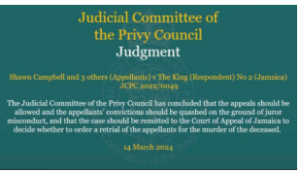
Jamaican Dancehall Artist Vybz Kartel’s Murder Conviction Overturned

Jamaican Dancehall Artist Vybz Kartel’s Murder Conviction Overturned

The renowned Jamaican dancehall artist, Vybz Kartel, whose real name is Adidja Palmer, has had his murder conviction overturned. One of Jamaica’s most popular artists, Kartel has collaborated with international stars such as Jay-Z and Rihanna. The 48-year-old musician was sentenced to life in prison in 2014 for the murder of Clive “Lizard” Williams on the Caribbean island.

Lengthy Trial and Appeal

Kartel’s 64-day trial was one of the longest in Jamaican history, culminating in a verdict that required him to serve a minimum of 35 years in prison, later reduced to 32 years upon appeal. The court heard that Clive Williams and another man, Lamar Chow, were given two unlicensed firearms by Kartel for safekeeping. When they failed to return the guns as agreed, they were summoned to Kartel’s house in August 2011. Chow testified that they were attacked, and the last thing he saw was Clive Williams lying motionless on the ground. Williams was never seen alive again, and the house was burned down days later, with no body ever recovered.

Persistent Claims of Innocence

Vybz Kartel and his co-accused, Shawn Campbell, Kahira Jones, and Andre St John, have maintained their innocence since the original trial. Their appeal to The Privy Council, the highest court of appeal for Jamaica and other Commonwealth countries, was their final chance to overturn the verdict.

Allegations of Juror Misconduct

During the appeal, the defense argued that the trial judge mishandled allegations that a juror had offered 500,000 Jamaican dollars (approximately $3,200) to other jurors for a not-guilty verdict. Despite these serious allegations, the juror in question was not removed and participated in the final verdict.

Additional Concerns

The defense also argued that jurors were pressured to reach a verdict late in the day and that key mobile phone evidence was obtained in violation of guidelines. However, the Privy Council focused on the bribery allegations, finding them sufficient to overturn the convictions.

Judicial Decision

Judge David Lloyd-Jones stated that allowing the juror alleged to have offered bribes to remain on the jury was “fatal to the safety of the convictions” and infringed upon the accused’s fundamental right to a fair hearing. Consequently, Vybz Kartel’s case will return to Jamaica’s Court of Appeal to determine the next steps, which may include a new trial, a retrial, or potentially his release.

Conclusion

We hope this information clarifies the basis for the overturning of Vybz Kartel’s conviction. Please note that this newsletter is intended to provide a general guide to the subject matter and should not be relied upon without seeking legal advice.

For further information or legal assistance, please contact us at info@wka.co.ke, visit our website at wakilihub.co.ke/, or call us at +254 798 03 580. Our Nairobi Hub is located at Parklands, Valley View Business Park, 6th Floor, City Park Drive, Off Limuru Road.

Authors:

  • William Karoki, Founding Partner
  • Florence Mwende, Associate
Categories
Uncategorized

WHAT IS SERVICE CHARGE?

How Can a Management Company Increase the Service Charge in Nairobi or Kenya?

Under Section 255 of the Companies Act, 2015, members of a company can pass resolutions either as written resolutions or at a meeting of the members. This means that in Nairobi or other parts of Kenya, a Management Company can increase the service charge by passing a special resolution. According to Section 257 of the Companies Act, 2015, this requires a majority vote of at least 75%. Once passed, the Management Company can increase the service charge while ensuring transparency and fairness by following these steps:

Steps to Increase Service Charge in Kenya

  • Consultation: The Management Company may consult with professionals to determine the appropriate service charge based on the services provided.
  • Justification: A clear justification for the increase should be provided. Factors like inflation, rising maintenance costs, service upgrades, and facility improvements can all be valid reasons for adjusting the service charge.
  • Transparency: Maintaining transparency is key. The Management Company should provide property owners with all relevant information, allowing them to ask questions and seek clarifications during the process.

Legal Developments on Service Charges in Kenya

If a Management Company in Nairobi or elsewhere in Kenya neglects its duties or fails to account for service charge funds, property owners and shareholders can seek legal redress in court. It is important to know your legal rights to protect your interests.


How Can a Management Company Recover Service Charges from Defaulters in Kenya?

In cases where some owners refuse to comply with paying service charges, the Management Company has several legal options:

  • Issue a Demand Letter: The company can issue a demand letter for payment of all outstanding service charges and any arrears.
  • Disconnect Services: The company may disconnect communal services such as water or electricity, deny gate access, and restrict use of facilities like gyms and swimming pools for defaulters.
  • Right of Forfeiture: If the owner continues to default, the Management Company can exercise its right of forfeiture, terminate the lease, and take possession of the premises.
  • Institute a Civil Suit: The company may file a civil suit in the Commercial Court to recover the unpaid service charges as a debt.

Key Court Cases on Service Charge in Kenya:

  • Melisa Awour Odera v Keringet Estates Limited [2021]: The court emphasized the importance of service charges for maintaining communal facilities and stated that service charge payments are essential for the upkeep of the development.
  • Debra Limited v Board of Trustees National Social Securities Fund & Another [2017] eKLR: The court ruled that service charge is a debt recoverable through civil action rather than through distress for rent.

Conclusion: Understanding Service Charges in Nairobi and Kenya

Before purchasing or leasing an apartment or office in Nairobi or other parts of Kenya, it is crucial to consult a lawyer to understand the service charge structure, especially if it is not clearly outlined in the lease agreement. If a service charge increase is proposed, seek legal assistance to ensure that the Management Company follows the correct procedures.

For further information or legal assistance on service charge compliance or any other legal issue, feel free to contact us at info@wka.co.ke or visit our website at wakilihub.co.ke/. You can also reach us at +254 798 03 580, Nairobi Hub: Parklands, Valley View Business Park, 6th Floor, City Park Drive, Off Limuru Road.

Categories
Uncategorized

IS A POST-DATED CHEQUE A VALID MODE OF PAYMENT?

IS A POST-DATED CHEQUE A VALID MODE OF PAYMENT?

One of our readers asked if a post-dated cheque is a valid mode of payment. We address this important issue in this edition of WKA Newsletters.

Under Kenyan law, there is no specific legal reason to decline post-dated cheques for debt settlement, as long as there is a willingness to pay the debt and accrued interest. Typically, a post-dated cheque is issued when a debtor does not have sufficient funds on the date the creditor demands payment and instead provides a cheque with a future date. This gives the creditor assurance that the payment will be honored on that future date. However, it is essential to consider the specific circumstances and agreements between the parties involved when accepting or issuing a post-dated cheque.

Legal Provisions and Case Law

Section 316A of the Penal Code, Cap 63, states:

  1. Any person who draws or issues a cheque on an account is guilty of a misdemeanor if the person—
    • Knows that the account has insufficient funds;
    • Knows that the account has been closed; or
    • Has previously instructed the bank or institution not to honor the cheque.
  2. Subsection (1)(a) does not apply to a post-dated cheque.
  3. A person guilty of a misdemeanor under this section is liable to a fine not exceeding fifty thousand shillings, or imprisonment for up to one year, or both.

In Daniel Simiyu Omali & another v Attorney General & 3 others [2016] eKLR, the court held that a misdemeanor offense could not be founded on post-dated cheques drawn when the drawer knows the account has insufficient funds.

In Amis Makokha Wanekhwe v Republic [2019] eKLR, the court found that issuing post-dated cheques that were dishonored due to insufficient funds could not sustain criminal charges under Section 316A(2) of the Penal Code.

Francis Mwangi & another v Republic [2015] eKLR and Republic v Charles Kithinji HCCA No.159 of 2003 further supported that dishonesty is not proven where a post-dated cheque has been issued. The Abdalla v Republic (1971) E.A. 657(CAD) and Oware v Republic (1989) KLR 289 cases clarified that a post-dated cheque is a representation that there will be funds on the future date shown on the cheque, not that there are sufficient funds at the time of issuance.

Conclusion

A post-dated cheque is a valid means of payment, especially where there is a willingness to pay the sum owed. However, we recommend parties also consider executing an Acknowledgment of Debt Settlement Agreement to ensure a legally binding instrument enforceable in court, providing further assurance that the post-dated cheque will not be dishonored.

We hope this information helps in understanding the debt settlement laws. Please note that the contents of this newsletter provide a general guide and should not be relied upon without legal advice.

For further information or legal assistance on compliance or any other legal issue, please contact us:

  • Email: info@wka.co.ke
  • Website: wakilihub.co.ke/
  • Phone: +254 798 03 580
  • Address: Nairobi Hub, Parklands, Valley View Business Park, 6th Floor, City Park Drive, Off Limuru Road

Authors:

  • William Karoki, Founding Partner
  • Florence Mwende, Associate